Build the Schedule Before the Rush
Year-end fundraising may culminate in December, but successful campaigns are built months earlier. By the time donors are thinking about their year-end gifts, your strategy, creative, data, production and digital channels should already be working together.
How to Plan for a Successful Year-End
The key is to plan backward from your desired launch dates.
Start by reviewing last year’s results:
- Which audiences responded?
- Which messages generated the strongest response and revenue?
- Which channels performed best?
Use those findings to establish realistic goals and determine where to invest this year.
Next, build a master schedule that accounts for every step between strategy and execution. For direct mail, that means allowing time for concept development, copy and design, internal approvals, data processing, personalization, printing, lettershop production and postal delivery. At year-end, production calendars get crowded quickly. A late approval early in the process can create pressure throughout the rest of the schedule.
- 60–90 days out: Review results, establish goals, identify audiences, develop the campaign strategy, and reserve production capacity.
- 30–60 days out: Finalize segmentation, creative, and offers. Coordinate direct mail, email, social, and your donation experience. This way donors receive a consistent message across all channels, giving supporters multiple opportunities to respond.
- Final 30 days: Shift from planning to execution. Confirm data, URLs, QR codes, donation forms, and tracking. Schedule digital follow-ups and make sure your team knows exactly what launches and when.
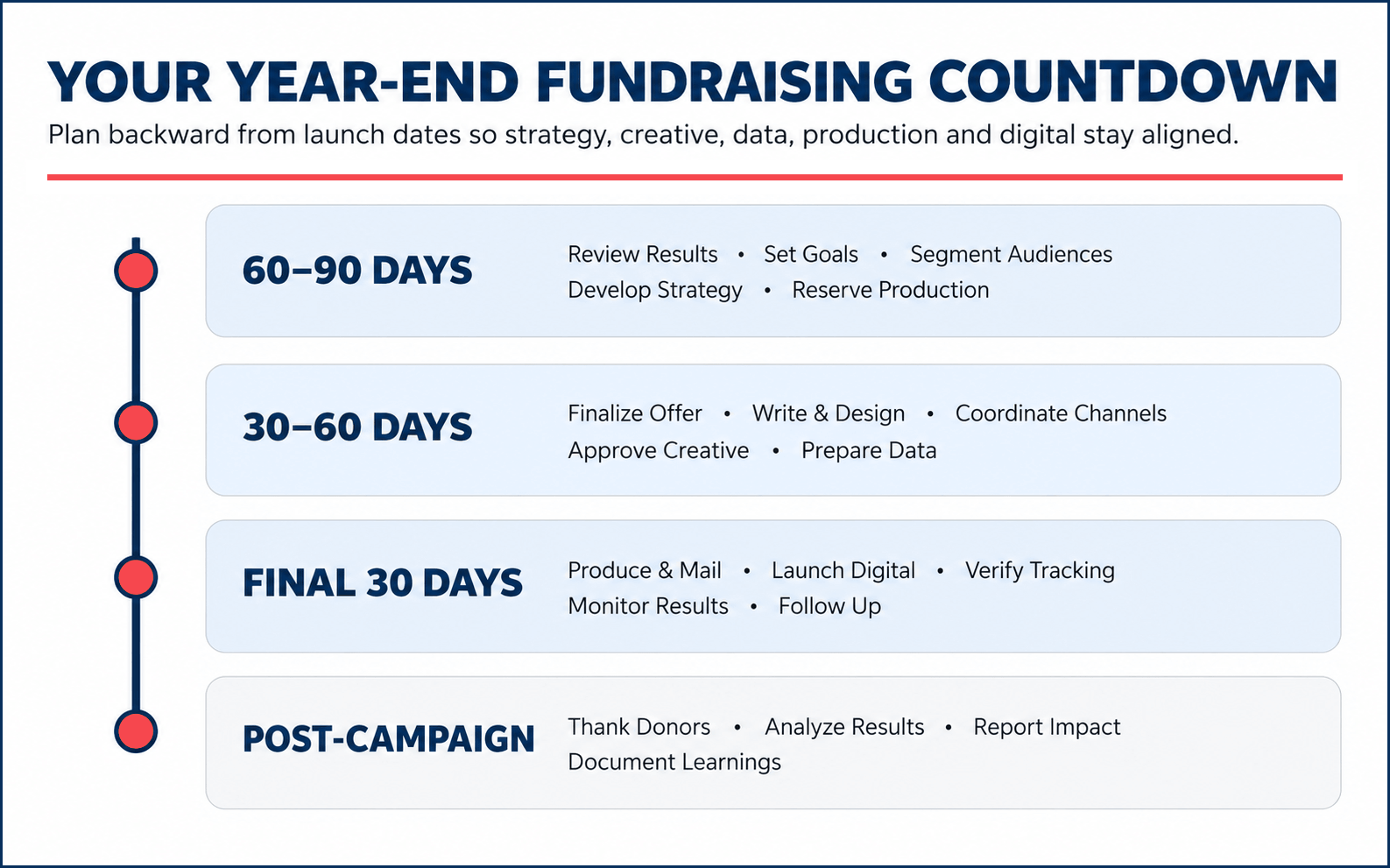
And don’t forget what happens after December 31. The conclusion of a year-end campaign is just the beginning of the stewardship process. Have a plan in place to promptly thank donors, communicate the impact of their support, and share what their generosity made possible throughout the past year. Take advantage of this time to strengthen donor relationships through thoughtful cultivation and reporting. Then offer a look ahead at the priorities, opportunities, and goals supporters can help achieve in the year to come. Campaign analysis, results reporting, donor thank-you communications, and impact updates should all be part of the year-end schedule.
The strongest year-end campaigns aren’t rushed into the mail or launched at the last minute.
They’re planned backward, coordinated across channels and executed forward.
At IDM, we help nonprofit organizations turn year-end strategy into an integrated fundraising plan—and keep every moving piece on schedule.