
Virtual Events & Stewardship
Go Beyond the Ask by Using Virtual Events as a Powerful Tool in Your Stewardship Fundraising Strategy
Virtual events are no longer a temporary solution from the pandemic era; they have become a durable component of effective nonprofit strategy. While many organizations view virtual events primarily as fundraising vehicles, they can be equally—and often more strategically—valuable as stewardship tools.
For organizations seeking to deepen donor relationships, improve retention, and build long-term loyalty, virtual events should be incorporated into the fundraising and stewardship plan.
Why Stewardship Deserves Center Stage
Acquiring a new donor often costs substantially more than retaining an existing one. However, many nonprofits concentrate resources on acquisition and year-end appeals, while stewardship activities remain underdeveloped.
Effective stewardship:
- Reinforces donor trust
- Demonstrates impact and transparency
- Builds emotional connection
- Increases lifetime donor value
- Encourages recurring and upgraded giving
Virtual events can make consistent, meaningful stewardship more scalable and cost-effective.
What Makes Virtual Events So Effective for Stewardship?
Compared with traditional galas or in-person gatherings, virtual events can reduce common barriers to participation:

- No travel
- No venue limitations
- Lower production costs
- Easier access for busy supporters
- Greater geographic reach
This accessibility can enable organizations to engage donors more frequently and more personally.
For example, rather than relying on a single annual banquet, organizations can establish quarterly virtual touchpoints that keep the mission visible throughout the year.
Types of Virtual Events That Strengthen Donor Relationships
1. Impact Update Briefings
Host short, 30–45 minute virtual sessions where leadership shares:
- Program updates
- Financial transparency
- Success stories
- Future goals
These sessions create transparency and show donors their gifts at work.
Example: A human rights organization could host a quarterly briefing to highlight program progress across communities in Kenya and Guatemala.
2. Behind-the-Scenes Conversations
Invite donors into the inner workings of your mission:
- Meet program staff
- Hear directly from beneficiaries (when appropriate and ethical)
- Tour facilities virtually
- Showcase project development
These experiences can foster a stronger sense of connection, even in a virtual setting.
3. Donor Appreciation Events
In place of a formal awards dinner, consider the following options:
- Virtual appreciation receptions
- Recognition slideshows
- Shout-outs during live broadcasts
- Brief, live remarks from the Executive Director to recognize and thank donors
These moments reinforce that donors are partners, not just funding sources.
4. Educational Webinars
Position your nonprofit as a thought leader by offering learning opportunities aligned with your mission.
For example:
- An environmental nonprofit might host a webinar on climate trends.
- A mental health organization could provide expert-led coping strategy sessions.
Educational programming can create value beyond the donation transaction.
5. Small-Group VIP Virtual Gatherings
Major donors and recurring supporters often value exclusive access and opportunities for direct engagement.
Consider:
- Invite-only strategy previews
- Q&A sessions with leadership
- Early access to campaign announcements
- Brief, live remarks from the Executive Director to recognize and thank donors
These events can strengthen trust and may naturally lead to deeper engagement and increased investment.
Turning Engagement Into Long-Term Giving
Virtual stewardship events should not feel like indirect fundraising appeals. Instead, organizations should:
- Lead with gratitude.
- Share authentic impact.
- Invite feedback and conversation.
- Follow up personally afterward.
When donors feel informed and valued, increased giving often follows organically.
Nonprofits that integrate stewardship touchpoints throughout the year often realize the following outcomes:
- Higher retention rates
- Increased recurring giving
- More peer-to-peer advocacy
- Greater campaign success
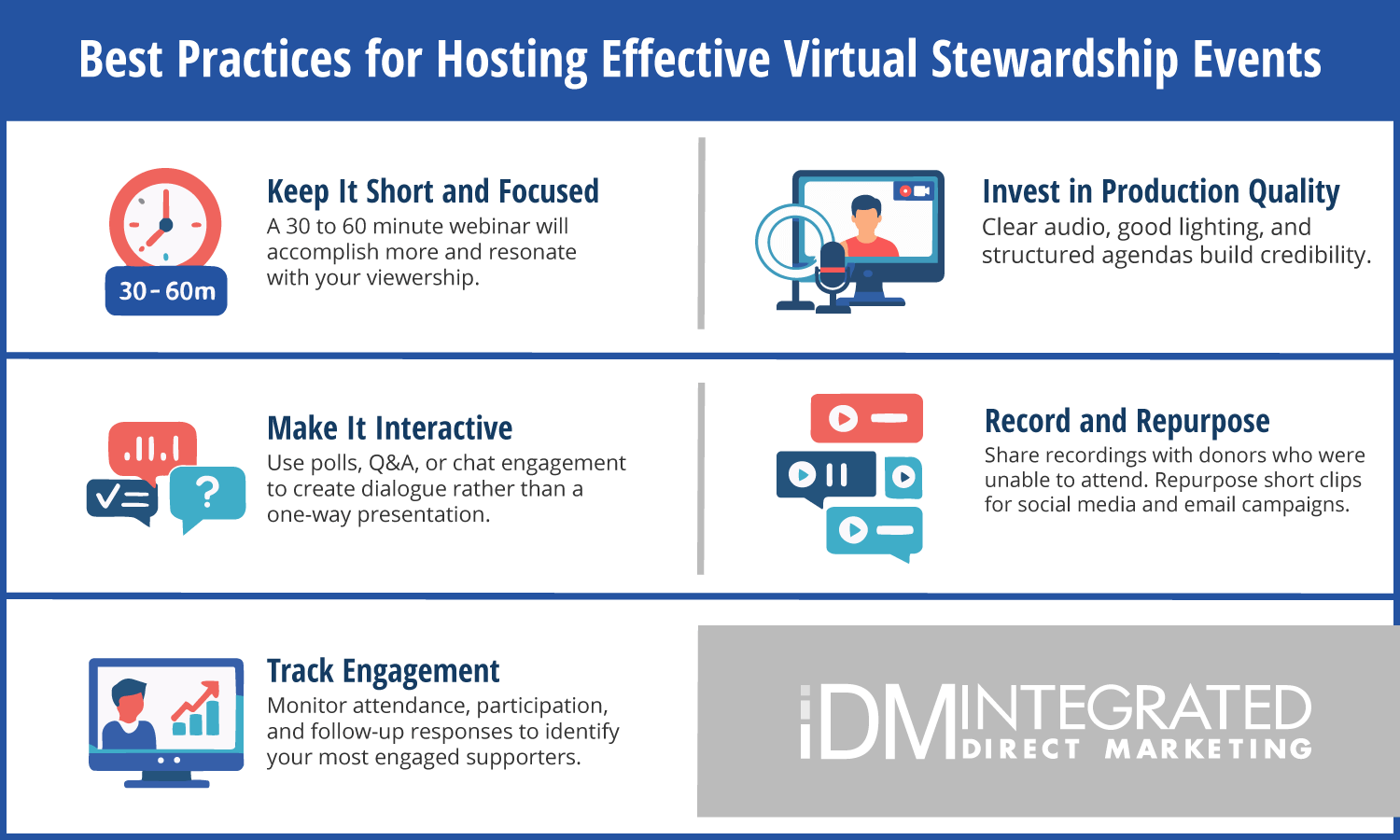
Making Virtual Events Part of Your Annual Stewardship Plan
Rather than treating virtual events as one-off initiatives, incorporate them into the annual fundraising calendar:
- Q1: Impact update
- Q2: Educational webinar
- Q3: Behind-the-scenes tour
- Q4: Donor appreciation celebration
This cadence supports consistent, mission-centered communication throughout the year.
The Big Picture: Relationship > Revenue
The most sustainable nonprofit fundraising strategies are rooted in relationships, not transactions.
Virtual events can enable organizations to:
- Show impact in real time
- Bring donors closer to the mission
- Build community among supporters
- Demonstrate transparency
- • Steward at scale
When thoughtfully integrated, virtual events become more than a fundraising tactic; they serve as a reliable engine for relationship building.
In today’s philanthropic landscape, strong donor relationships remain one of an organization’s most important assets. If you’re looking to strengthen yours, connect with an IDM fundraising expert.