
FEP Q1 2026: Good News, But Let’s Not Declare Victory Yet
If you work in nonprofit direct marketing, the latest Fundraising Effectiveness Project (FEP) Quarterly Report probably feels a bit like a mixed bag. There are definitely reasons to be encouraged, but there are also some warning signs that should keep us focused on the fundamentals.
Let’s start with the good news.
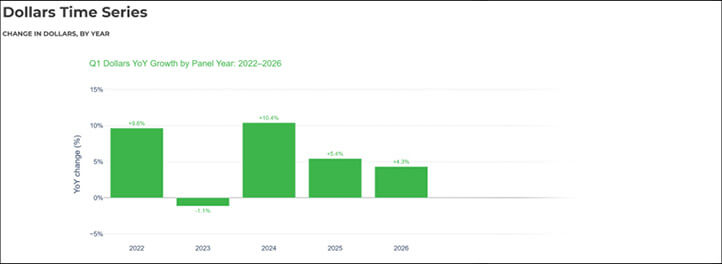
According to the Q1 2026 report, total charitable giving increased by 4.3% year over year. That’s solid growth, especially given the economic uncertainty many nonprofits have been navigating over the past few years. At the same time, donor counts declined by just 0.8%, a noticeable improvement from the 2.3% decline reported a year earlier.
On the surface, that sounds like progress. And it is.
The challenge is that we’re still seeing a familiar pattern: nonprofits are raising more money from fewer donors. The donor decline may be slowing, but it hasn’t stopped. The sector appears to be stabilizing, not necessarily growing.
One bright spot is that existing donors appear to be carrying much of the growth. The report points to stronger performance among current supporters and suggests that investments in stewardship and mid-level donor cultivation may finally be paying off. For organizations that have spent the last few years building more personalized donor experiences, that’s welcome validation.
But here’s what jumped out at me: new donor acquisition remains a challenge.
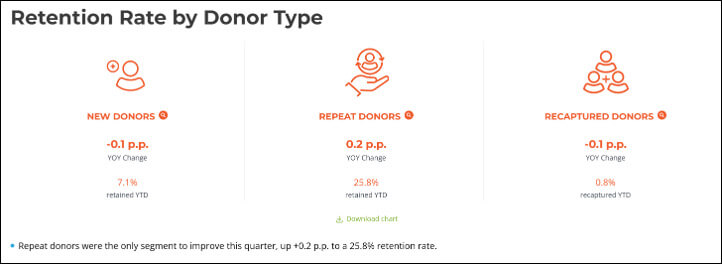
As direct marketers, we know that today’s newly acquired donor is tomorrow’s second gift, monthly sustainer, mid-level donor, and planned giving prospect. Yet the sector continues to struggle with bringing in and retaining enough new supporters to offset natural attrition. Retention overall remained essentially flat, which means we haven’t yet solved the problem of turning first-time donors into long-term relationships.
The report also raises an important question about how sustainable recent fundraising growth really is. Some of the strong giving results seen in late 2025 may have been influenced by donors accelerating gifts ahead of anticipated tax law changes. If that’s true, some revenue may have been pulled forward from future giving rather than representing entirely new generosity. That could make the second half of 2026 a little more challenging than recent results suggest.
So what does this mean for nonprofit fundraising teams?
It’s not time to pull back on acquisition. It’s time to get smarter about what happens after acquisition. Welcome series, second-gift conversion strategies, sustainer asks, donor onboarding, and personalized stewardship should be at the center of our planning. Revenue growth is encouraging, but long-term fundraising health depends on building a bigger, more loyal donor base.
The headline from Q1 is promising: donor losses are slowing. But the organizations that thrive in the years ahead will be the ones that turn that stabilization into real growth by investing in both acquisition and retention. That’s where the next chapter of fundraising success will be written.
Ready to strengthen your donor pipeline and turn today’s supporters into tomorrow’s most valuable advocates? Connect with the fundraising experts at Integrated Direct Marketing to build strategies that drive both immediate results and long-term growth.